Click here to view our new improved design and photography blog:
http://hundven-clements-news.com

Image of Forum Building by Herzog & de Meuron, full feature on our new site.
Click here to view our new improved design and photography blog:
http://hundven-clements-news.com
Image of Forum Building by Herzog & de Meuron, full feature on our new site.
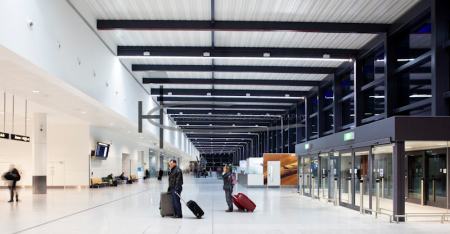
As the Olympics draw closer, Britain moves one step nearer to delivering participants and spectators there on time. Capita Symonds have recently completed the complex extension of Gatwick’s North Terminal, the busiest single runway airport in the world. The upgrade involves a new state of the art passenger and transport interchange, Departures and Arrivals concourse extension and new multi storey car park. The extension costing £150+m, will increase the passenger capacity by 10 million.
Hundven-Clements Photography have been onsite to document this monumental structure in the depths of winter. The weather was not our side during the day so the interior was where we begun, later on in the day we were blessed with 20 mins of colour as the sun set. With a multi layered approach to design by Capita, a swift transition between shuttle transport and the departure halls has been created. The dramatic roof generates a pleasant feeling of openness allowing natural light to illuminate the platforms during the daytime.
Photographing operational public structures on this scale comes with an array of logistical and photographic challenges. The first being access, understandably Gatwick has high security regulations in place, so an interview to obtain a permit to photograph was essential. Once onsite we found the general public to be surprisingly accommodating with appearing in photos, I guess the prospect of two weeks in Mauritus away from a British winter helped! Let us know what you think of the new development.




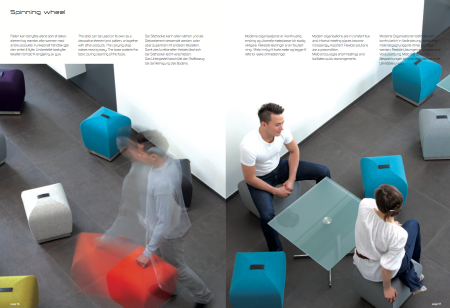
Fora Form is an award winning furniture company and one of Scandinavias longest running suppliers of furniture for the contract market. They are based on the coast of Norway close to the amazing scenery of the Norst West country.
Having worked with Fora Form on previous occasions I knew it would be a pleasure to shoot the location shots for this brochure with them. Test shooting and casting the right people was my introduction to the project, and in Marianna and Piero I found talented dancers who fitted the job perfectly. The sites were scouted by the Fora Form team and several locations on the coast of Norway were selected. An amazing background was guaranteed to add character to the shots! Outdoor shots were therefore set up by Sulesund, south of Ålesund clinging on to the rocks facing the ocean. For the indoor shots we were fortunate to use Runde Miljøsenter on the windswept and breathtaking Island of Runde as well as in the brand new Ulstein Expo Centre in Ulsteinvik.
The actual shoots were a collaboration of efforts from the whole team, stylish furniture, talented models, energetic Fora Form team, everyone joined in. There was a lot of energy on the days and I really feels this came through in the end results. The index page of the brochure is a good example of this, all the pieces had to be carried down onto the rocks in order to get the shot, no digital retouching here!
As always in this kind of landscape we are challenged by the weather, you never really know if your are going to be lucky or not! There was a fair amount of attempts to start setting up the furniture outside only to be surprised by a solid rain cloud, but in the end all the pieces came together and we got our images!
Here is a link to the complete brochure: http://viewer.zmags.com/publication/d527c07d
By Birthe Hundven-Clements




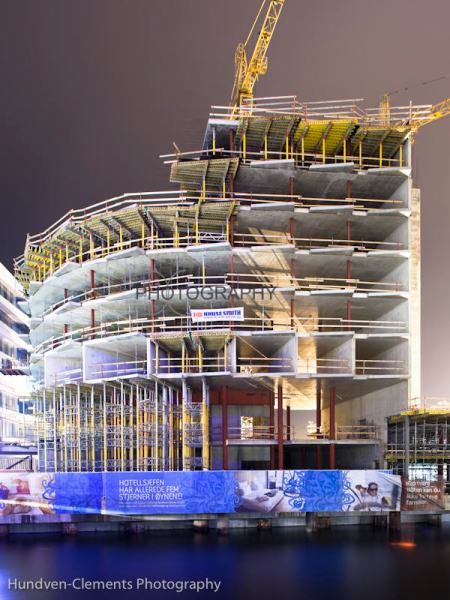
On a cold winter’s evening after a day of photographing landscape architecture projects I was exploring the new developments on the south side of Aker Brygge at Tjuvholmen. A new hotel and gallery complex is dramatically forming. With only the surrounding ambient light and a few stray floodlights from the docks behind, some interesting results were achieved.


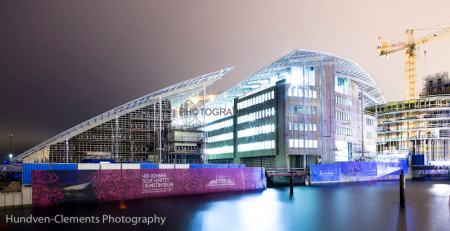
At Hundven-Clements Photography we relish challenges. So when Link Landskap Arkitektur, based in Oslo, decided to conduct a study of their recently completed landscape projects we were more than happy to help. Landscape architecture has not directly played a prominent role in our core business previously and therefore had to be approached with extra care.
The primary challenge is that projects are often literally the walkways, steps, greenery or our cities infrastructure. So finding the right light to describe the projects was critical. Whilst a range of contemporary day time images focusing on human interaction formed the core of the documentation (which can be viewed here : Landscape Architecture Portfolio), the client was very excited by the more alternative night shots. Here is a small selection. Please let us know what you think.


Marzorati Ronchetti is no ordinary metal manufacturer. They produce some of the most elegant refined structures with every type of metal imaginable for the worlds greatest designers. MR concentrate on the high end design market for architects like Norman Foster and notable artists like Anish Kapoor. With the engineering and design capabilities to manufacture unusual solutions tailored for specific environments a diverse range of products are the result.
With the up and coming birthday of the company MR commissioned Hundven-Clements Photography to document a range of their London successes, here are the results.
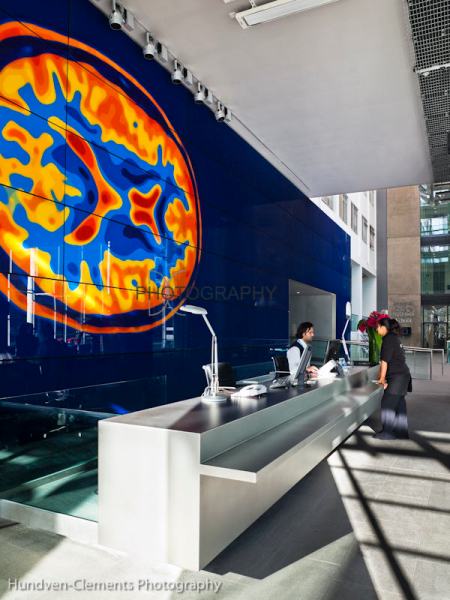


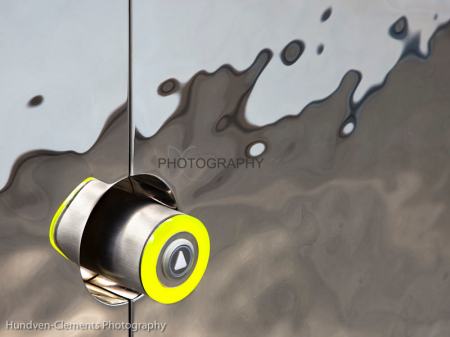


Office spaces certainly have a different energy when you move away from the chaos of London. In the HQ of Vital, one of the largest insurance companies in Scandinavia a feeling of relaxed serenity is present. No one is running around stressed, a feeling of communal support was present which was helped largely by the recent renovation. A colour theme of yellow runs throughout the whole office space, introducing a vibrant energy which contrasts nicely with the exposed brickwork and glass divisions.


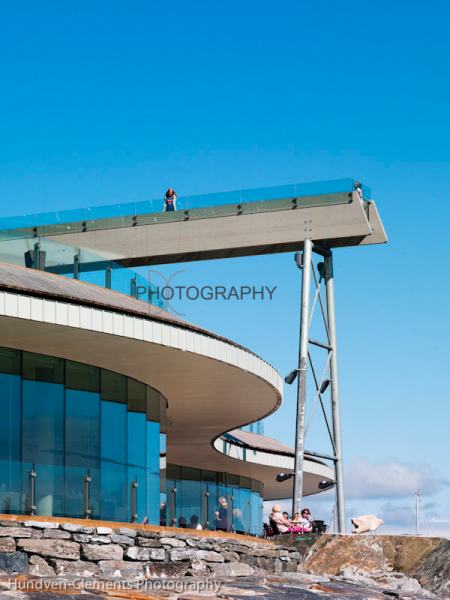
Councils across europe have finally begun to show more confidence in the growth potential of investing in architecturally brave cultural centers. This probably stems from the success of the Guggenheim in Bilbao and New York. Here is a humbler example from the West coast of Norway in Os. Designed by Grieg Arkitekter AS a fun and exciting building has been produced. The project houses a new gallery, concert hall and restaurant. Looking out on to the wild fjord it is the perfect location to enjoy cultural activities.
The interior design and branding was completed by the local design firm Fuggibaggi Design AS
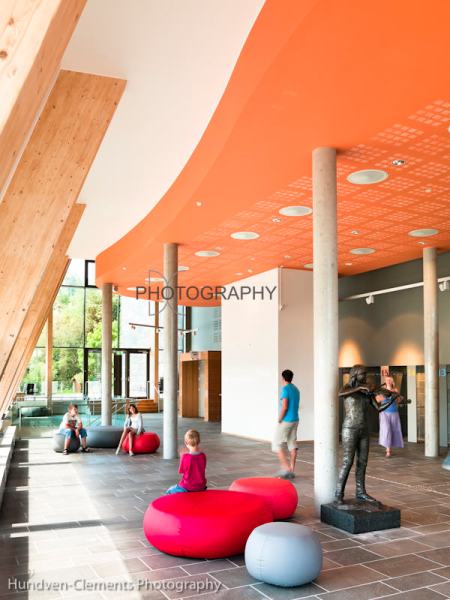
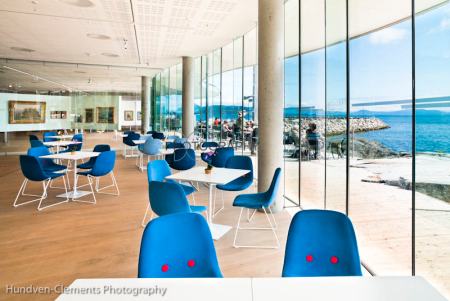


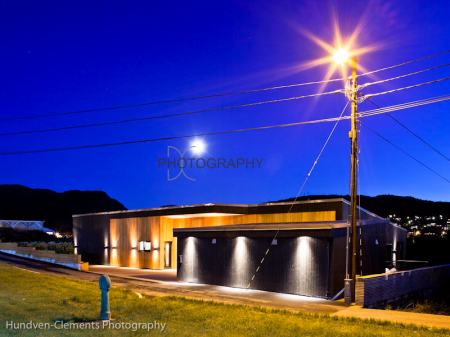
Beautifully placed by the Fjords surrounding the Nordic city of Bergen, the angular Villa TK stands proud on a hill top. A balance between wood, metal and glass has been carefully designed by Morten Nedreås of En Til En Arkitekter AS. The Villa has been constructed to maximise the stunning views over the adjacent fjord, with clean eye lines opening up the space.


This is Norways most prestigious high end retail shopping centre. Based in the centre of Oslo between the central station and the palace on Karl Johan’s Street it sits in a prime location. The renovation and joining of multiple adjacent buildings was Link Arkitekter’s largest challenge. The complex interior space is set across three floors, cleaverly connected by a collection of ramps, walkways and stairs.


 HUNDVEN-CLEMENTS PHOTOGRAPHY